

An analysis of Pachinko Parlor by Elisa Shua Dusapin
3 min read time
Something about translated works has always fascinated me. Not only are you immersed in the setting but in thought patterns or diverse writing styles. There is a reason why even though, Haruki Murakami’s stories repel me in themes, they still capture my interest. It’s the same reason I love language. We communicate not only in different words but sentence structures, norms, and so much more. I love how different ideas can be connected, what details get chosen to be omitted, and what things are said and noticed more often. I could go on. Influences, folklore, etc. All of it.
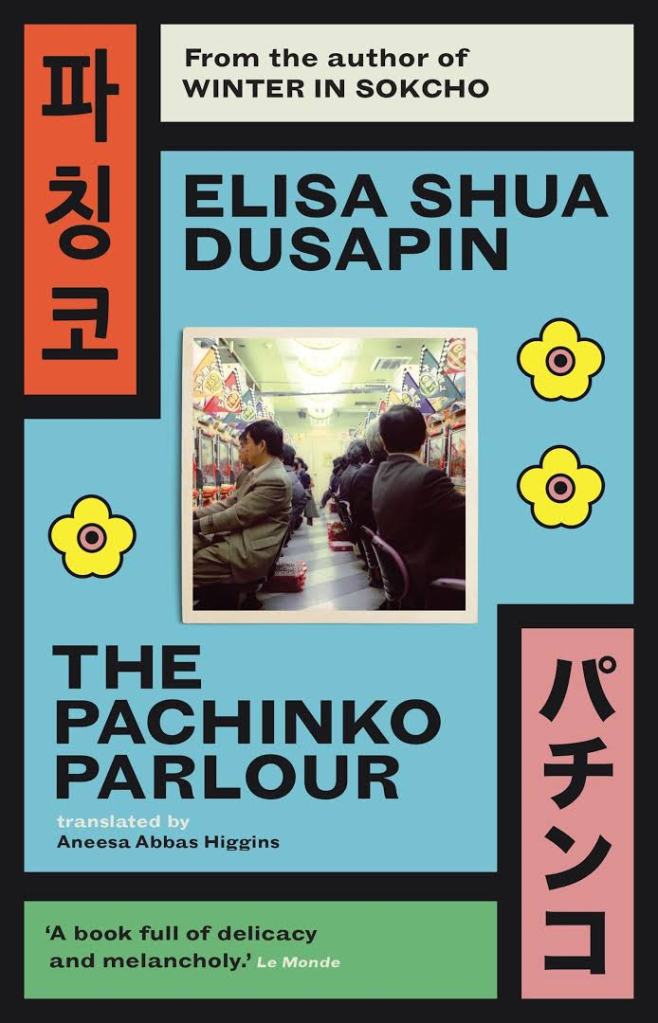
So what leads me to Pachinko Parlor? I picked it up because lately, short books have been my jam. That, and something about books set in Japan will always draw me. The color blocking on the cover is gorgeous as well. I expected something cityscape and focused on contemporary women’s issues. I got that and also received an exploration of a theme very prevalent in my own life too.
What theme struck me the most was how divisive language can be. I’ve taken my fair share of language courses and the common reason for learning is connection. I learn for the same reasons. However, language can exclude as well. Not everyone has a knack for it, you see. Even if they do, there is more to language than just words.
Our protagonist Claire goes through just that. Her main struggle is that she is trying to connect to her grandparents while also carrying their burdens as well. She carries the loss of her mother tongue and the responsibility to relearn it too. That and to learn Japanese as well so she can communicate in the place her grandparents have relocated during the Korean War.
The purpose of her visit is to relocate her grandparents back to Korea in their old age. While she stays, she finds an overall in-betweenness. She is uncomfortable for the majority of the book. From awkwardness, foreignness, and from a lack of language. She talks of her grandmother’s hesitation to buy train tickets because she has to speak Japanese. She has lived there for most of her life. Two generations down, Claire has traces of this complicated relationship. She also cannot communicate as well as she would like but tries anyway.
Representation is always something I love. And to finally have it for myself is beautiful. To be two generations away yet not being enough of one thing or the other. Struggling to communicate with your grandparents too. It isn’t talked about enough.
So even though I felt such solace in the shared experience, that’s not all this book had to offer. The characters were quite strange yet relatable. It also gave such a fantastic sense of place in Tokyo. The descriptions were truly unique and apt. I honestly felt immersed in the rainy streets and train cars. I will definitely reread this if I travel to Japan. It’s too good enough to not. Or I might reread it just to travel via book mind.
 The paper backpacker
Leave a comment